Prepared for a week in a large city after our breather in Salzburg, we headed off to Vienna on our easiest train journey yet: just under 2.5 hours on an Inter-City Express with just a handful of stops before reaching Wien Hauptbahnhof. From there it was a short ride on the U1 subway line to Stephansplatz and we arrived at our rental for the week.
A City Bursting with Destinations
From about 1611 to 1916, Vienna was the primary seat of power of the far-flung Habsburg Empire. With territories stretching from the Balkans to Hungary to Silesia (southern Poland), west into the Alps (the Tyrol), and northwest to the Low Countries, the Habsburg possessions were a multi-lingual, multi-cultural conglomerate held together by administrators based in Vienna. Add in the fact that the Habsburg ruler was frequently elected Holy Roman Emperor, and it’s easy to see why the city was a center of palace construction, decorative and performing arts, diplomacy, literature, scientific research, elegant desserts, match-making, and social-climbing. Today Vienna is the capital city of the modern Republic of Austria, with all the governmental agencies and business interests that come along with that status. In other words, there’s a lot to see here. Since we were only spending a week, we wanted to focus our time on seeing things that are unique to Vienna. Our chosen destinations fell into roughly three categories: medieval and imperial sites of power; architecture, city planning, and building exteriors representing the comprehensive renovation of the city in the 19th century; and modern art and architecture from about 1900 onward.
Stephansdom
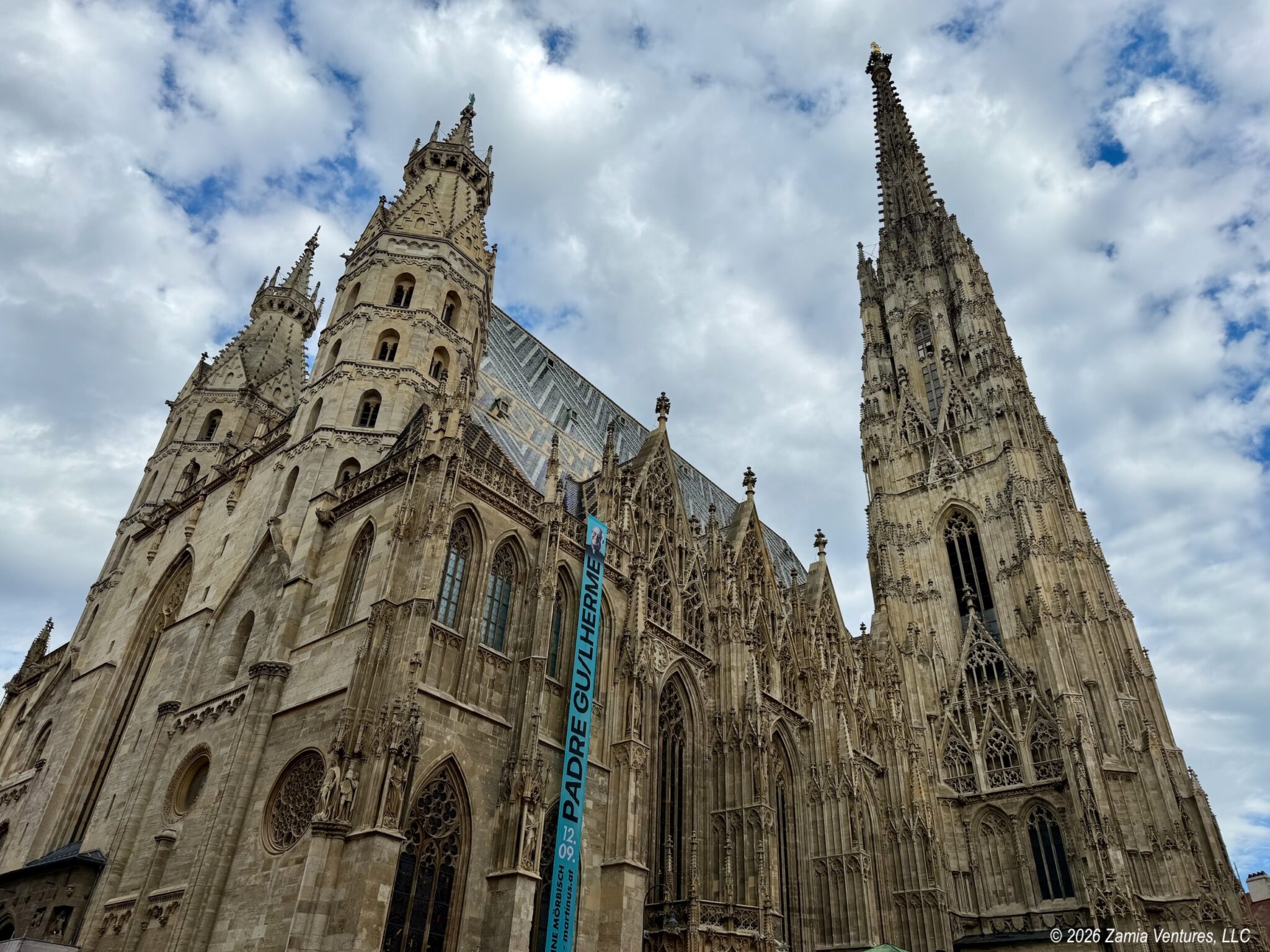
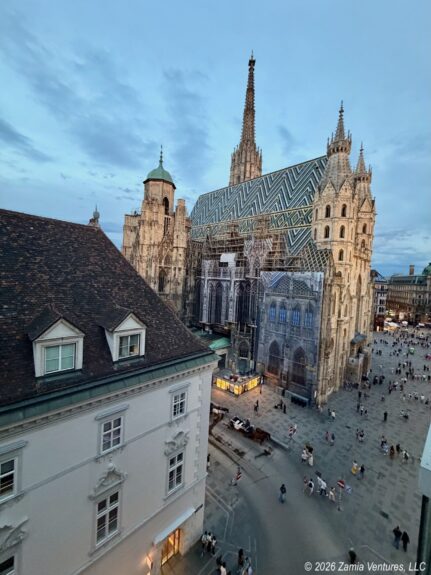
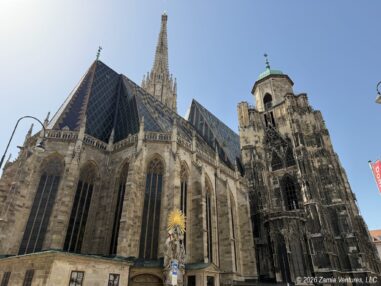
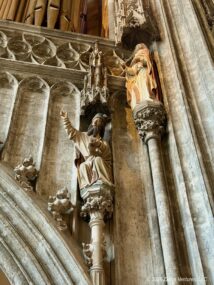
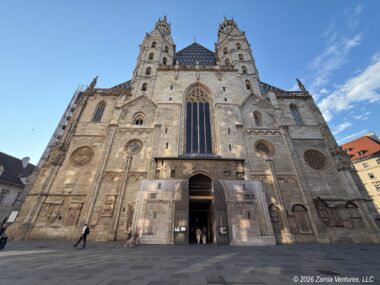
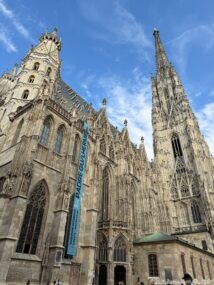
With the current structure dating from about 1511, the Stephansdom (St. Stephen’s Cathedral) has defined the skyline of Vienna for half a millennium. Our lodging for the week had an outstanding view of the north side of the cathedral, and we walked through the plaza daily, so it also defined our experience of Vienna. The ornate gothic ornamentation, the impossibly tall south tower (450 feet high), and the steeply-pitched roof emblazoned with a roof tile mosaic are all iconic. My favorite part: Vienna actually believes in cleaning its historic stonework! The most recent multi-decade project is nearing completion, with scaffolding only covering a small portion of the exterior, and the fully restored south face absolutely gleams in the sunlight.
Schönbrunn Palace
Our only big palace interior visit of the entire trip was our day spent at Schönbrunn – and this behemoth really takes the better part of a day. The Baroque palace was built mainly in the 1740s and 1750s and contains over 1,400 rooms while the gardens extend over a mind-boggling 400 acres. An introductory multimedia presentation gives the overall history of the property and introducing the main “characters” that are part of the tour: Empress Maria Theresa (the primary builder), Kaiser Franz Joseph I (the longest-ruling Habsburg who lived and worked primarily at the palace), and the Kaiser’s wife Empress Elizabeth (“Sisi”) (a tragic figure who is tragically over-hyped in Viennese tourism). The very good audio tour (available in 15+ languages) comes with the standard ticket and allowed touring at one’s own pace, giving just the appropriate amount of context for each room. Some online reviewers complained that “only” 40 rooms are open to the public. When each room offers its own unique form of sensory overload, we think 40 is enough!
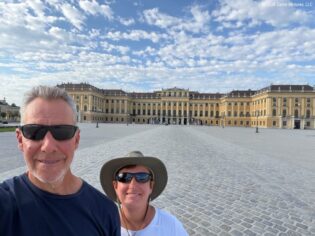
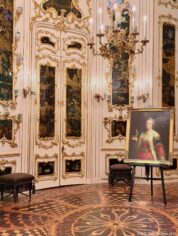
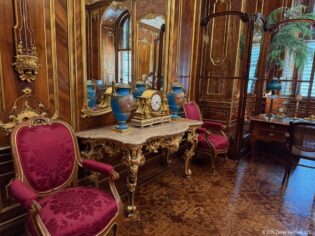
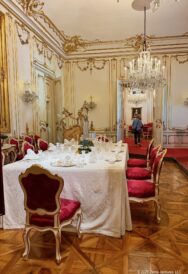
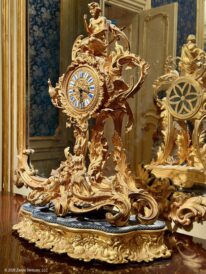
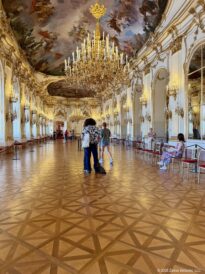
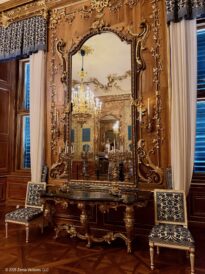
Once we finished gaping at the luxurious interiors, we still had miles of walking ahead of us in order to take in the gardens. The gargantuan Orangerie (the second largest in Europe behind Versailles) is impressive, as is the living collection of unique plants from around the world. The perfectly-straight broad paths through the gardens divided the space into a multitude of sub-gardens, with eye-popping fountains located at the end of strategic sight-lines. The Gloriette structure on the crest of a hill at the southern end of the formal garden was intended to glorify the Habsburg regime (actually, most of the fountains are various types of self-aggrandizement) but today is mainly notable for providing breathtaking views over the property and the broader city. After making it all the way to that end of the property, we rewarded ourselves with Sachertorte and beverages at the cafe that now occupies the space where Kaisers formerly partied.
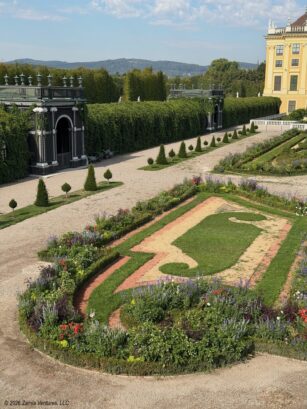
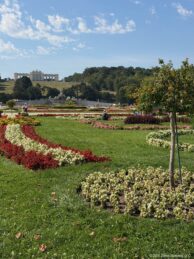
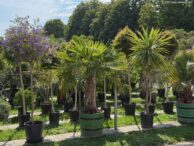
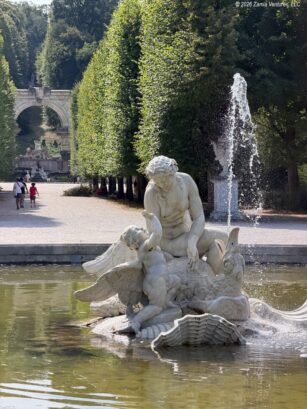
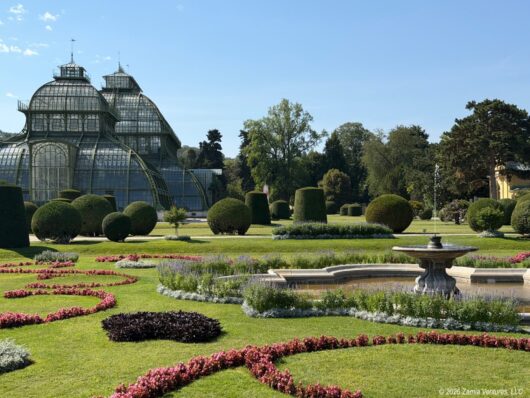
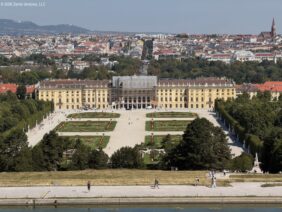
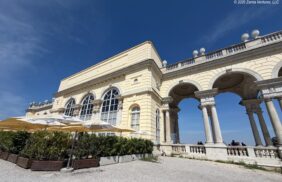
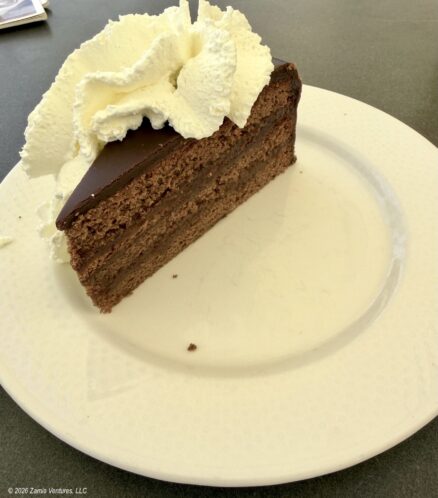
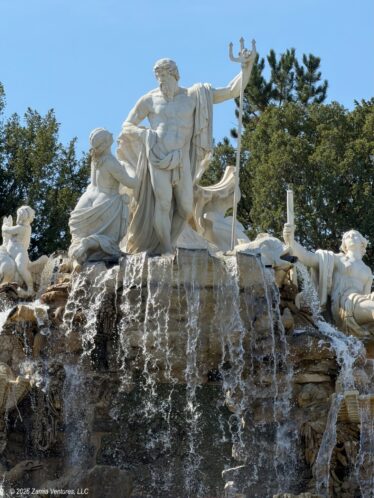
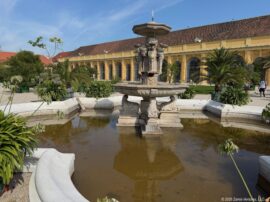
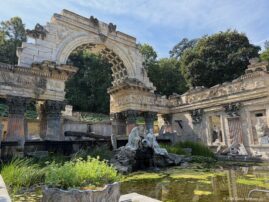
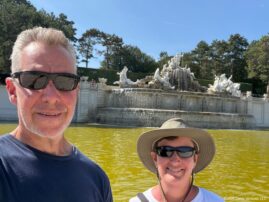
Though originally a country estate located far outside the walled city, Schönbrunn was very easy to reach on the subway – there’s a stop right in front.
Prunksaal (State Hall) of the Imperial Library
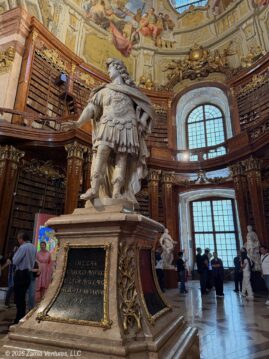
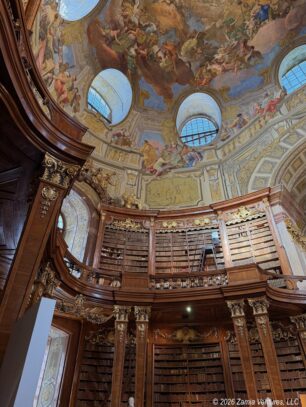
Back in the central city, we chose not to visit the imperial apartments in the Hofburg (the Imperial city palace) on the theory that they would more or less resemble Schönbrunn. One part of the palace complex that we did want to see, however, is the State Hall of the Imperial Library (now the National Library). Just as the huge and ostentatious Schönbrunn Palace projected political power and made diplomatic visitors feel small and slightly shabby, the Habsburgs also used their vast wealth to demonstrate their mastery of intellect and culture. A large collection of manuscripts and books is a good start, but isn’t it even better to impress visitors by presenting a world-class collection in an awe-inspiring setting? In the main hall of the Imperial Library, which was constructed starting in 1722, shelves containing nearly 200,000 volumes of books dating back to the 16th century tower over visitors, while the ceilings are richly decorated with frescoes highlighting the importance of science and other knowledge in the expansion of the empire (e.g., navigation). At the center of it all is a larger-than-life statue portraying library founder (and father of Empress Maria Theresa) Emperor Charles VI as Hercules. Subtlety was clearly a concept foreign to the Habsburgs.
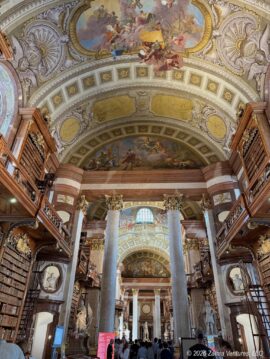
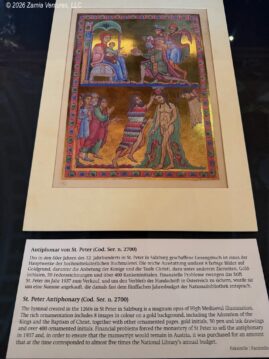
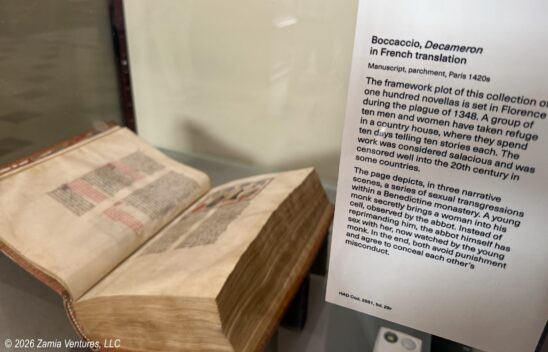
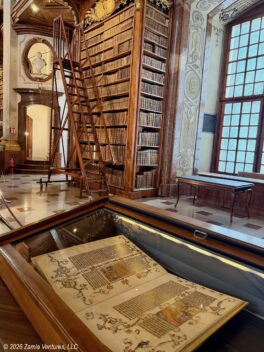
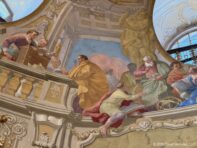
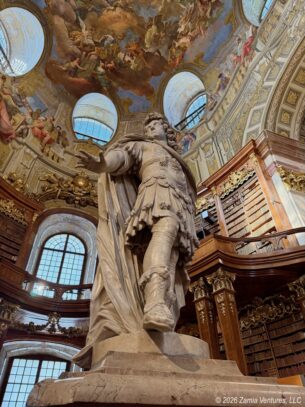
The exhibit cases along the main axis of the grand hall contain rotating exhibits of materials from the collection, and the archivists have an unbelievable surfeit of material to select from. The first few cases show replicas of pages from precious medieval illuminated manuscripts. They are replicas because the originals are too fragile to expose to so much light, but the interesting thing is that they are hand-made replicas using the original technique: pieces of vellum hand-painted with time-appropriate paints and gold leaf. The main exhibit during our visit was on the theme of love, and included fascinating materials ranging from a 16th century printing of Ovid’s Metamorphoses to handwritten notes for Don Juan: His Own Version from the private papers of contemporary author and Nobel Laureate Peter Handke. Seeing priceless archival treasures in what is perhaps the most opulent library in the world? Yes, please.
Globe Museum
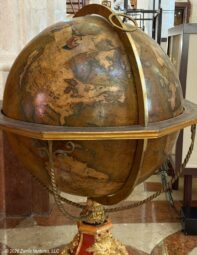
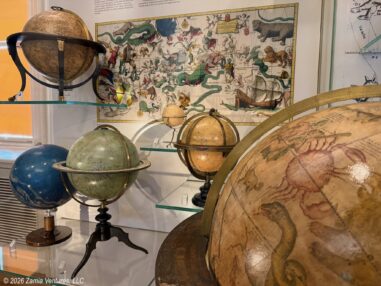
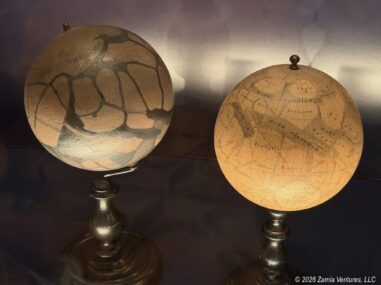
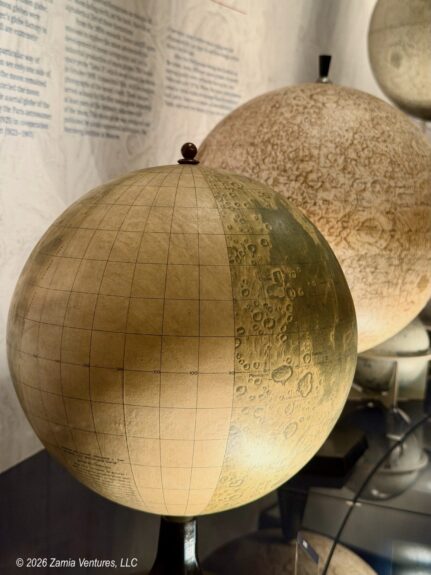
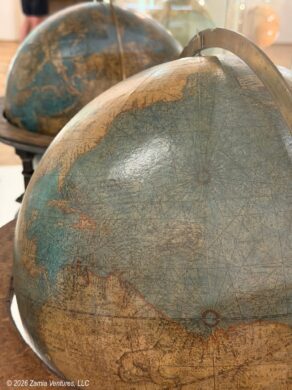
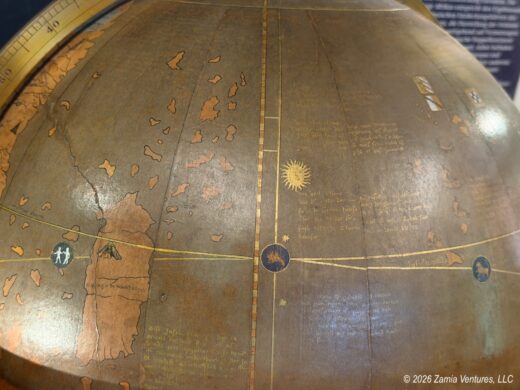
Another component of the Austrian National Library that we didn’t want to miss is the one-of-a-kind Globe Museum, with hundreds of representations of Earth, the skies, and other orbs, mostly dating from before 1850. Some of the historic highlights are terrestrial and celestial globes made by Gerard Mercator (yes, that Mercator) in 1541 and 1551, and monumental 110 cm (42 in) diameter 17th century globes made in Venice by renowned cartographer Vincenzo Coronelli. Just like old maps, these historic globes provide so much information about what Europeans thought the world looked like (or what they wanted it to look like). Case in point: a globe from the 1450s shows that (i) Europeans knew the Earth was round and (ii) they did not know about the Americas, because the globe shows nothing but water between Europe and Japan (which was “known” to Europeans since Marco Polo’s travels to China). Some of my favorites were the globes depicting the moon (the back was either blank or completely fanciful, of course) and the “canals” of Mars.
Schloss Belvedere (Upper Belvedere)
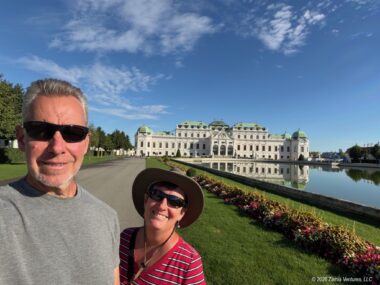
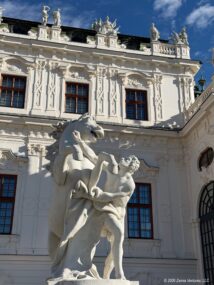
Out of dozens of art museums we could visit in Vienna we selected the Belvedere as one of our top choices. It is located within a remarkable palace built by Prince Eugene of Savoy, leader of the Austrian military in the late 17th and early 18th century. The visit is a bit of a two-for-one because the palace retains much of its original interior ornamentation and most rooms contain both artwork and information about the original design and function of the room itself.
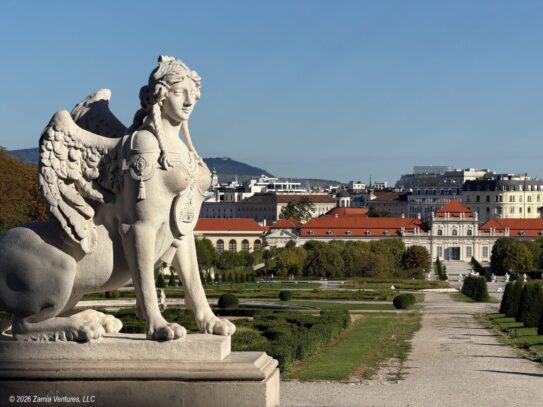
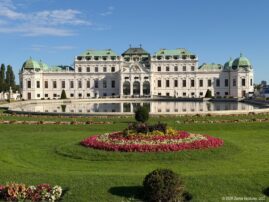
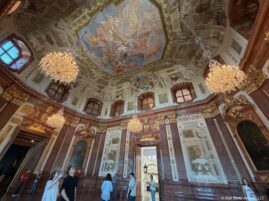
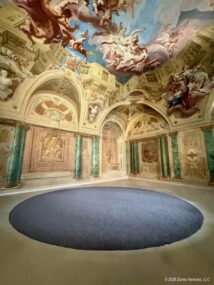
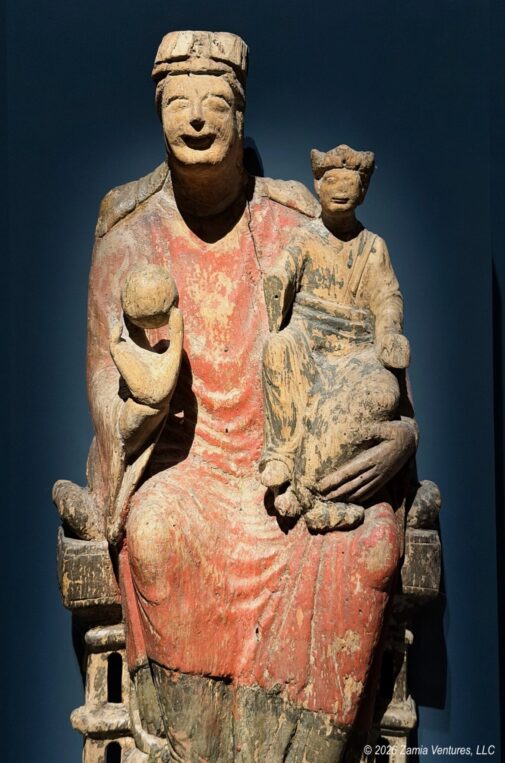
What we particularly enjoyed is the laser-focus of the art exhibit, which has been ruthlessly curated to cover 800 years of Austrian art in about 20 rooms. Granted, some of the rooms are pretty large, but the curators have not adopted the wall-tile hanging style popular in the Baroque period. Rather, the exhibit concisely covers all the major periods and movements of Austrian art while simultaneously exploring themes that resonate today: the emergence of artists as individuals who signed and claimed their work; the glory of war contrasted with its grim reality; income inequality; using historical paintings of glaciers to chart climate change; etc.
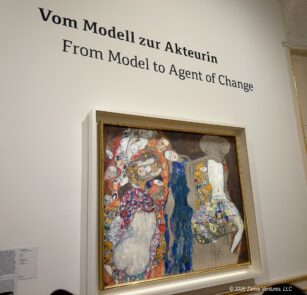
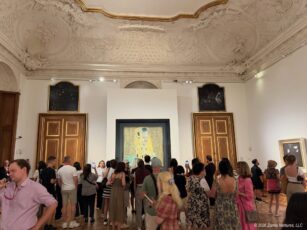
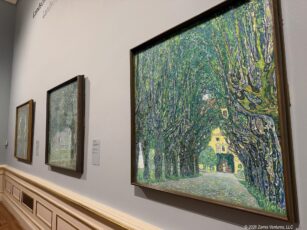
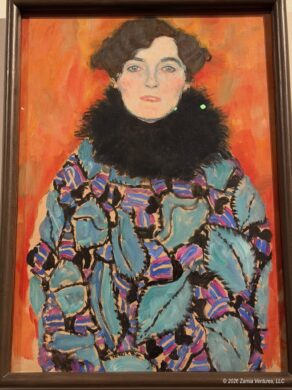
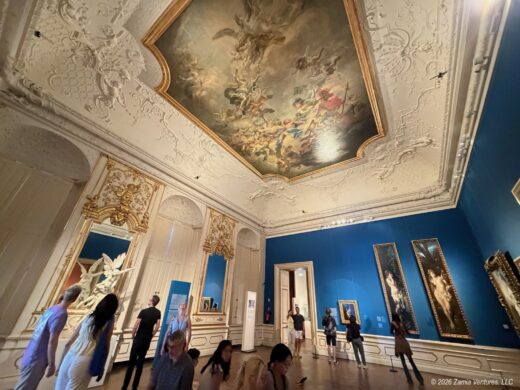
Two well-known Gustav Klimt pieces from his gold period— The Kiss and Judith and the Head of Holofernes — draw major crowds but the entire exhibit is full of “greatest hits” precisely because there is such a focused selection of works. Less is indeed more! Except when it comes to this blog, apparently, because we still have one more Imperial-based museum to discuss.
Albertina
Our final historical museum selection was the Albertina. Its world-class collection of prints and drawings has its roots in the extensive private collection assembled by Maria Christina, the favorite daughter of Empress Maria Theresa, and her husband Albert Casimir of Saxony in the late 18th century. This is primarily an archive and research institution, and only a tiny fraction of the 1 million+ works it owns are displayed at any given time. It’s also housed in the palace home of Maria Christina and Albert so seeing elegant state rooms is also part of the attraction.
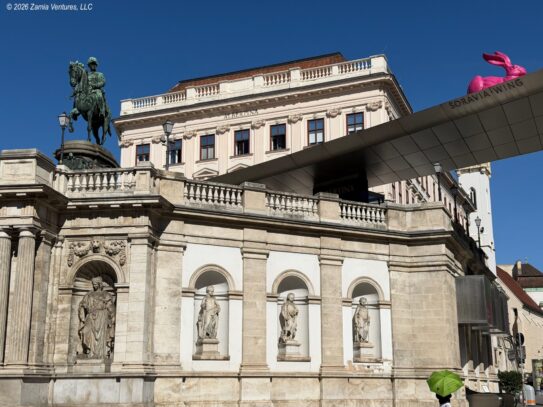
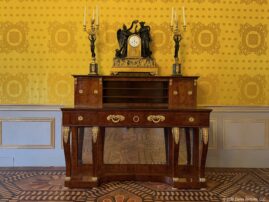
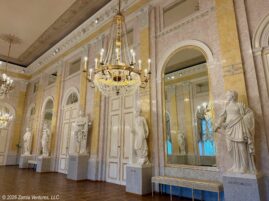
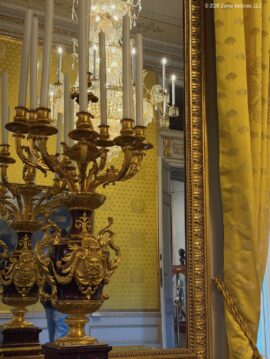
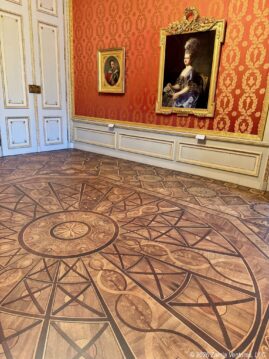
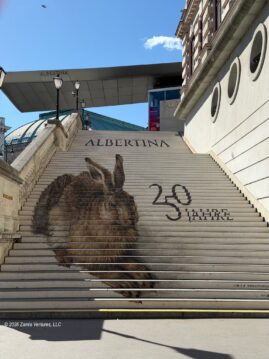
We are not necessarily huge fans of works on paper, but were persuaded to visit for two reasons. One is that the museum was celebrating the 250th anniversary of its founding acquisitions by placing some of its most important works on rare display; paper materials are exhibited sparingly to protect them from light. The other reason is that the museum has continued to expand its portfolio beyond paper and now permanently exhibits one of the finer collections of Impressionist and Expressionist paintings in Europe, reconnecting us with Ken’s favorite artists whose work we admired on our trip to Chicago.
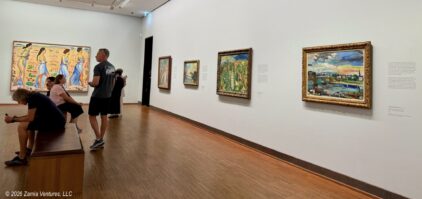
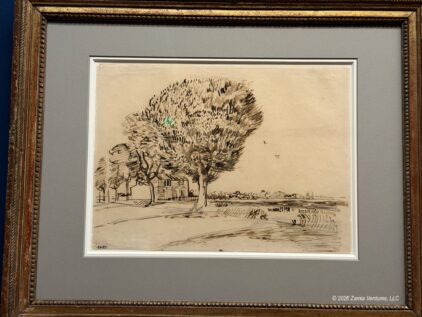
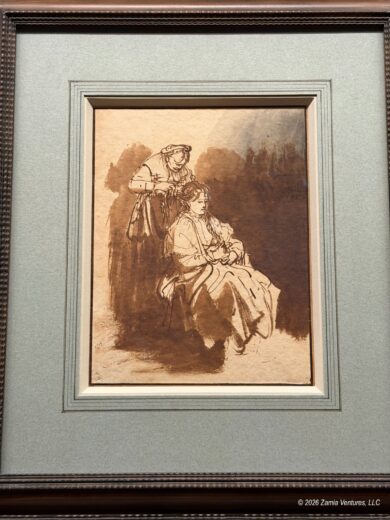
In the special anniversary exhibit, works by old masters like Albrecht Dürer, Michelangelo, Heironymus Bosch, Pieter Bruegel the Elder, and Rembrandt sat comfortably alongside much newer works by Klimt and Egon Schiele. The Batliner Collection of Impressionist and Expressionist works was better than I expected, though I preferred the lighter color palette of the Art Institute of Chicago collection. Overall, the Albertina was a worthwhile addition to a full menu of art museum visits.
In part two, because this post is getting very long: the comprehensive urban renewal of Vienna in the 19th century which established the city contours of today; 20th century art and architecture; our lodging, food, and beverages; and more.


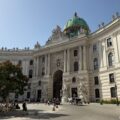
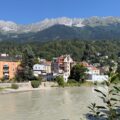
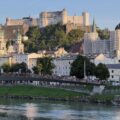
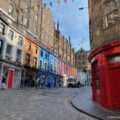
OMG, they clean the buildings??? Be still my heart! Dreams can come true!!!! Seriously, Europe, just clean the stonework and stop the graffiti. None of this is hard. Half the time, I want to show up with my own power washer and just fix this stuff, but I’m guessing they would frown upon that sort of thing. In any case, Vienna is proof positive that these things make a world of difference. (The palaces, museums, and gardens certainly help too!) What a gorgeous city!
I don’t know if it’s due to a sense of order or what, but the area of Vienna inside the Ringstrasse (the Innere Stadt / inner city) is meticulously clean and generally free of graffiti. Outside the Ring we definitely saw plenty of graffiti (hate to disappoint you). But since we spent most of our time in the destination-intensive Innere Stadt we were inside the perfectly maintained bubble and we loved it. There is even plenty of modern construction in the older areas, and somehow the sleek glass exteriors fit in nicely and accentuate the overall vibe of classiness. Vienna really is a great place to just walk around, and I’ll have approximately a zillion photos to prove that in my next post.
I know I’m pathetically late, but I really have been intending to spend time with your posts for at least a month. And this morning is the morning! So I’m sitting here enjoying my coffee and enjoying your posts. 🙂 Wow, the opulence of Vienna is over the top! The Biltmore looks like a caretaker’s cottage compared to the Schönbrunn Palace, lol. I would have especially enjoyed the acres of gardens, and I would love that globe museum. It’s so interesting to get a peek into how people understood the world so many centuries ago. And it always makes me wonder about the “reality” of what we believe to be true now and how that’s going to hold up in the future. I have a question: Is that Albrecht Dürer’s bunny painted on the steps of the Albertina Museum?? Ken must have been thrilled, haha!
Better late than never! We always accept comments here at Zamia Ventures. 🙂 Opulent is exactly the word for the great palaces of Europe. They also make me appreciate why Americans didn’t think their monarch could relate to their frontier situation 250 years ago.
The Albertina does indeed have Dürer’s Hare on the steps, because they have owned that work since the 17th century. It was on rare exhibition as part of the 250th anniversary celebration for the Albertina collection, and if I’m being completely honest the rabbit helped convince us to visit. But as usual the really famous exhibit items were surrounded by crowds and we found other offerings more interesting. My favorite in the special exhibit was the Van Gogh drawing – I guess I always assumed that he went directly to paint in order to take advantage of the thicker medium and build the surface, but it turns out his drawings achieve the same distinctive quality with ink. Fun to see!