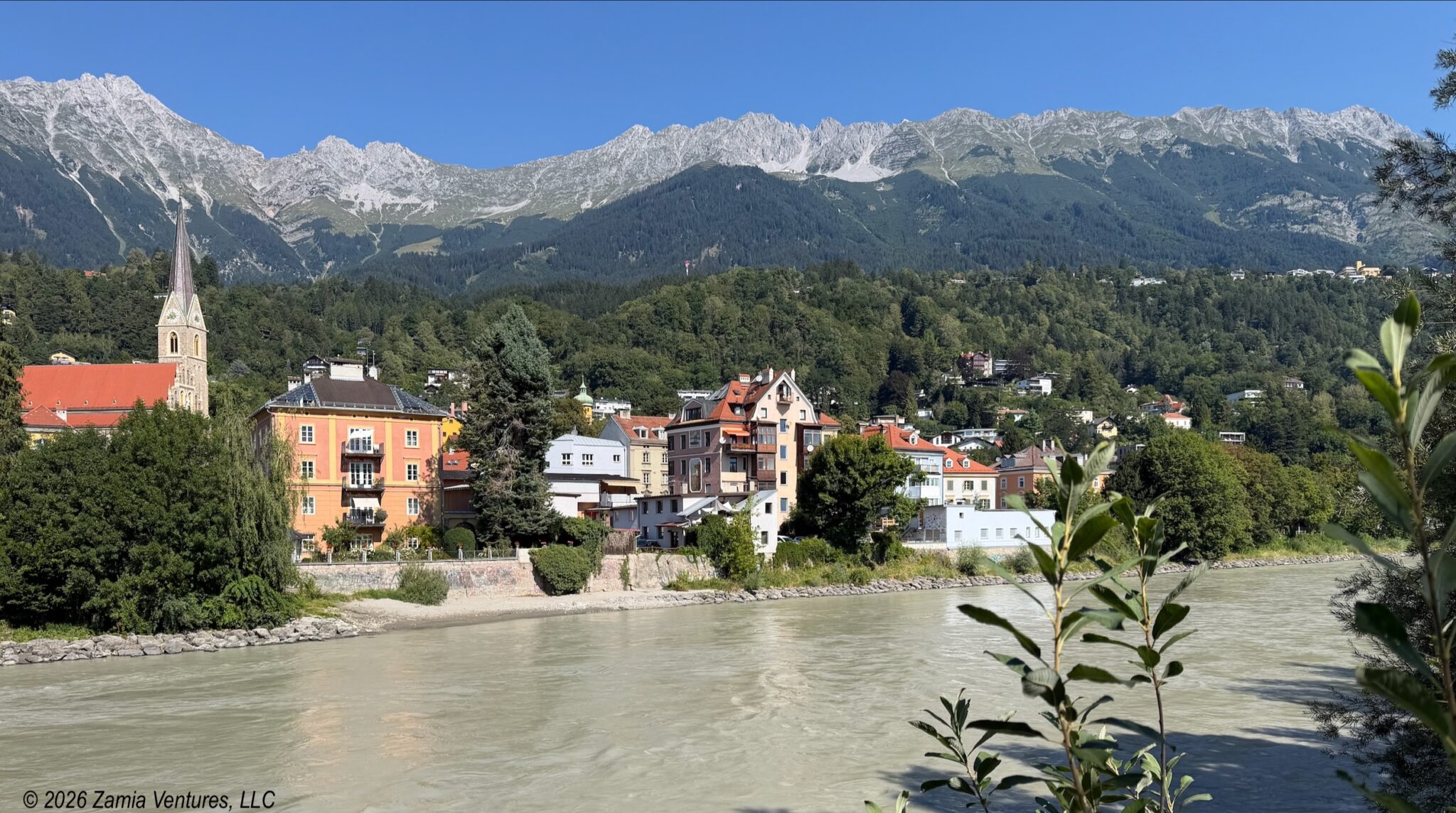
Our stay in Innsbruck, Austria covered Friday, Saturday, and Sunday, and this year Saturday was Maria Himmelfahrt (Assumption), a national holiday in Austria. We knew that some destinations might close for the holiday, and that we might encounter unusual crowds, but with a little maneuvering we made it work. After two enjoyable days in Munich we navigated the currently-under-construction Hauptbahnhof and set off by train for Innsbruck, arriving in under two hours to begin our city explorations.
Pedestrian/Cycling Life
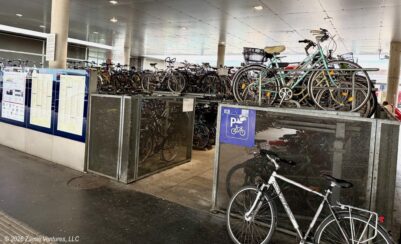
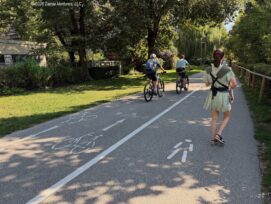
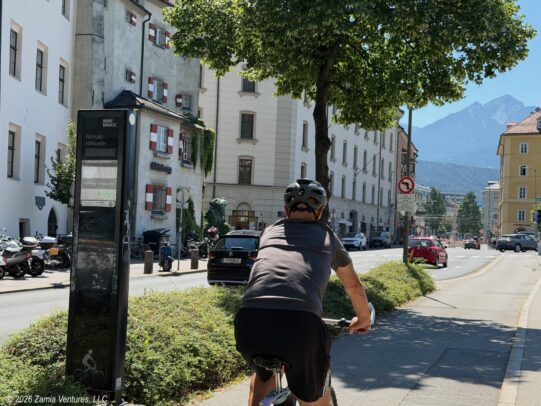
Virtually all of our activities were reachable on foot, and we were struck by the strong pedestrian and cycling culture of the city. A pedestrian-only historic downtown area is pretty typical for small European cities, but we were surprised by the massive number of bicycles we saw everywhere in town. There were separate, dedicated bike lanes on virtually all streets, and every sidewalk had hordes of bikes parked cheek by jowl in endless rows of bike racks. The train station is surrounded by multi-level parking “garages” for bicycles. Did we mistakenly take the train to the Netherlands?
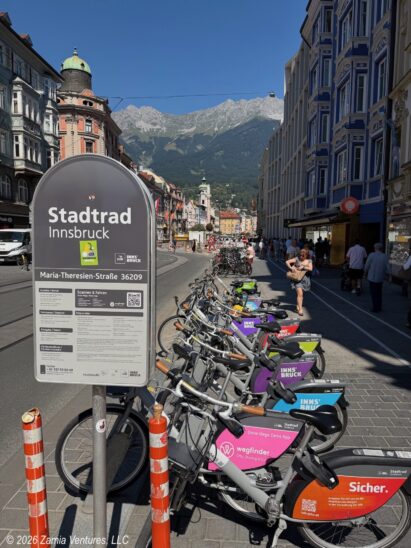
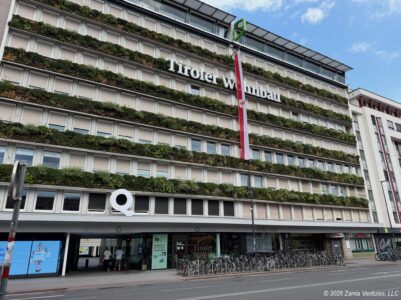
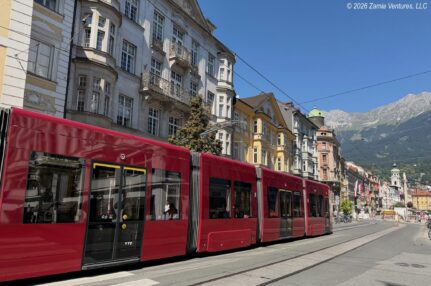
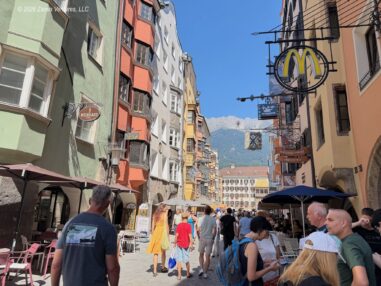
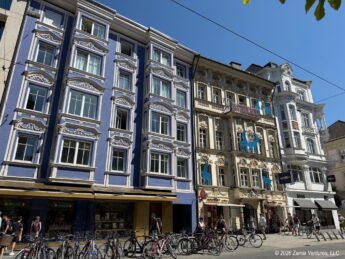
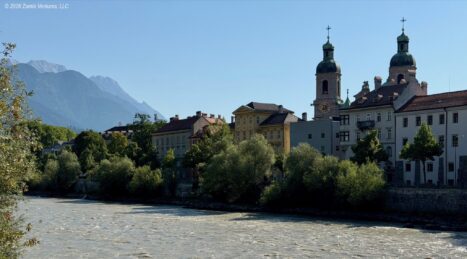
On our first afternoon in town, we ambled through the Altstadt, taking in the cheerful colors on the elegantly decorated facades. The entire area was full of tourists, with Italian being the main language we heard. Our strolls took us through the center of town and south along the River Inn to the Markthalle, the indoor farmer’s market of Innsbruck. Every turn around a corner brought us lovely views of cityscapes with dramatic mountain backdrops. On Assumption, we devoted the morning to walking a route up and down the Inn on the city’s excellent multi-use paths. Seeing the suburbs on the opposite side of the river was a nice change from the touristy old city and provided an appreciation for how easily one could live close to the city center — i.e., within an easy bike ride — and yet have a completely residential feel. The division of the riverwalk itself into “bicycle only” and “pedestrian only” lanes emphasized the value placed on all modes of transit (along with the Austrian sense of order).
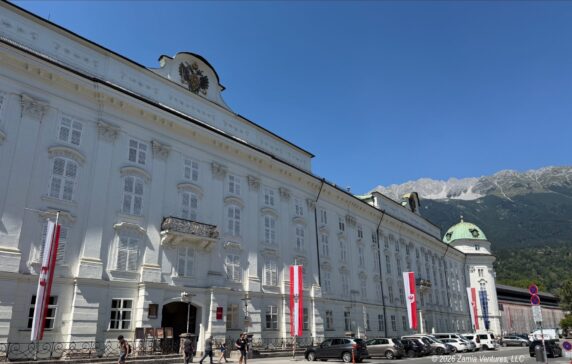
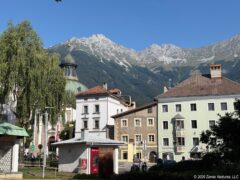
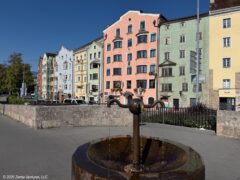
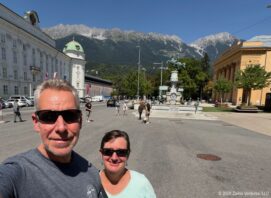
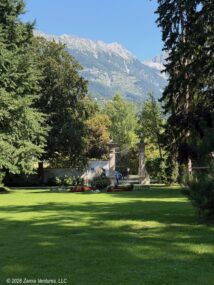
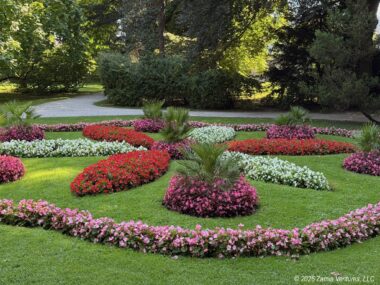
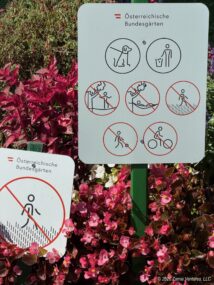
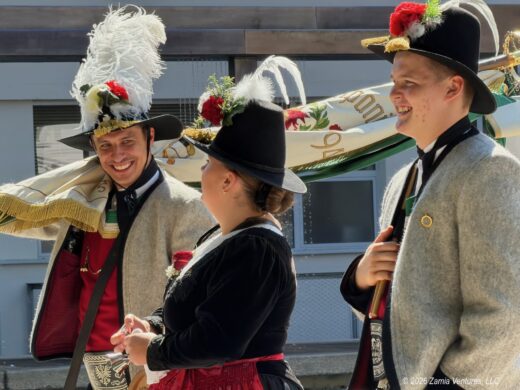
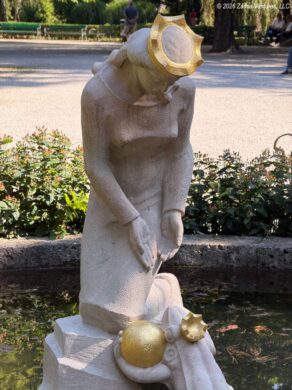
We also strolled through the beautifully-maintained Hofgarten, formerly the gardens of the Imperial palace. There were a lot of rules about using this garden, but fortunately we are fluent in IKEA (drawings of figures with no words) so we knew that we were prohibited from tightrope-walking in the garden. Message received! After properly walking only on the designated paths, we even saw several groups of Assumption parade participants wearing their traditional costumes after the festivities concluded.
Despite putting on a lot of miles during our stay, we didn’t head up into the mountains outside of town, since our next destination was hiking-only. But I could certainly see Innsbruck being a base for a hiking-focused visit, especially with train and cable car access to the Nordkette directly from the city center.
Museums and Churches
An important goal of our planning for this trip is to avoid “death by a thousand churches” — becoming so overwhelmed with impressive buildings and artwork that it all starts to look the same. So we selected just a few destinations in the museum and church category. At the top of my list was Schloss Ambras, billed as the world’s first museum. The Schloss is also the location of a major annual “Schlossfest” event on Assumption, involving music, games, demonstrations, and food from “ancient times.” In other words, it’s a Renaissance festival. Now, a Renaissance festival on the grounds of an actual Renaissance castle sounds pretty appealing, but the castle is closed during the Schlossfest and if we wanted to see it we would need to visit on Sunday.
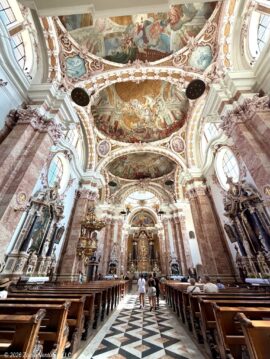
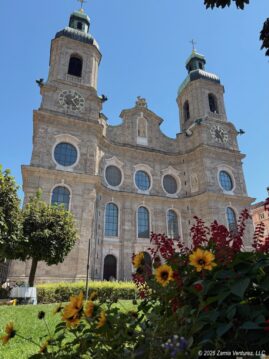
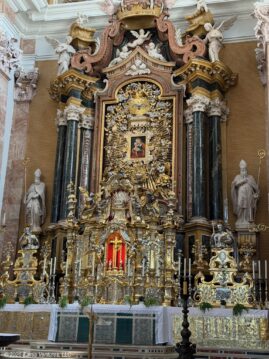
Before that, we included a few local highlights on our walks around town on Friday and Saturday. Most of these architectural and historical destinations exist because Innsbruck was the original center of power for the Habsburg Empire in the 15th and 16th centuries, located close to valuable silver and copper mines and (unlike Vienna at that time) not constantly being attacked by the Ottomans. At Dom du St. Jakob, the cathedral of Innsbruck, we once again admired the elaborate work of the Asam brothers, builders of the Asamkirche we saw in Munich, and also squinted to see the famous-but-tiny Lucas Cranach painting (Mariahilf) that serves as the altarpiece.
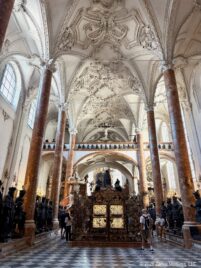
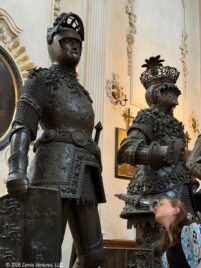
The nearby Hofkirche (Imperial Chapel) is utterly dominated by the memorial to Holy Roman Emperor Maximilian I (1459-1519). A charismatic figure who was pivotal in the expansion of the Habsburg Empire, Maximilian definitely believed his own marketing and oversaw preparations for his own elaborate self-aggrandizing tomb. Many important artists in German-speaking Europe were involved in the design and execution of the enormous memorial, with 24 marble reliefs and 28 life-size-plus statues of various luminaries with whom Maximilian wished to associate himself. His grandson and executor Emperor Ferdinand I ended up constructing the Hofkirche just to have someplace to put the thing, though Maximilian is not actually buried in it. We started out having a serious conversation about how the artists tasked with portraying the heroic (and often ancient/mythical) figures went about choosing their ages, manner of dress, and other characteristics, but things got loopy quickly. Match the captions to the statue photos below:
- “Why do you think Maximilian considered these women to be heroes? Was it because they could read?!?”
- “Are these things anatomically correct?”
- “Wonder what this guy did to get an exceptionally flamboyant treatment.”
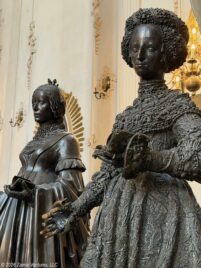
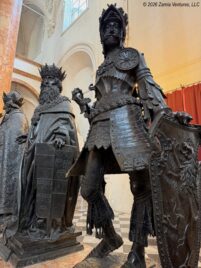
After the Hofkirche we explored the adjacent Tyrolean Folk Art Museum (Tiroler Volkskunstmuseum). The most unique element was a series of about 20 parlors (stube) reconstructed in full (floors, walls, ceilings, furnishings) from historical buildings like inns and private homes throughout the region, which we could walk through. While the wood carvings got a little more elaborate, quality of life seemed to remain pretty similar from the 15th through the 18th centuries.
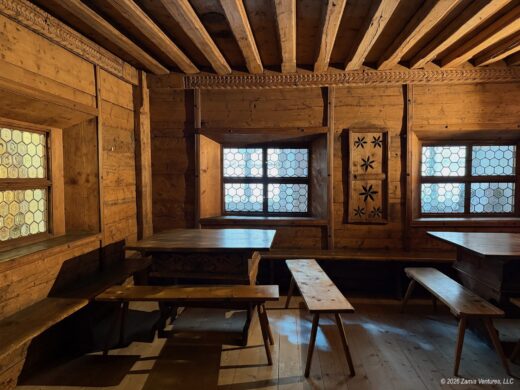
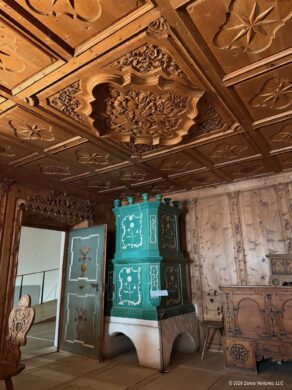
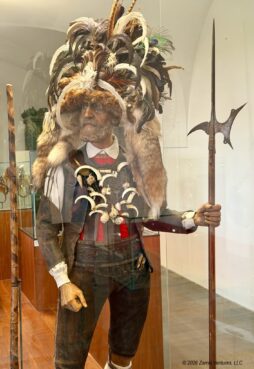
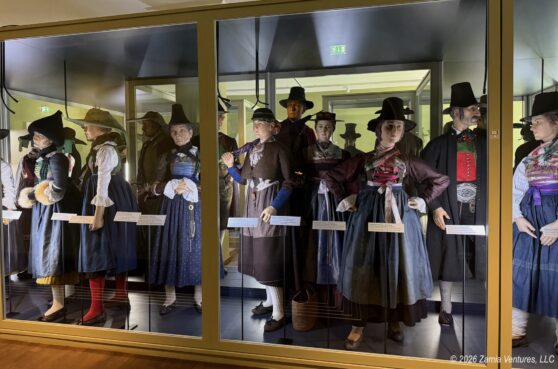
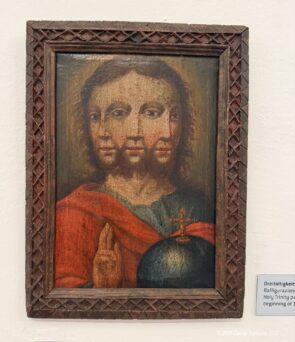
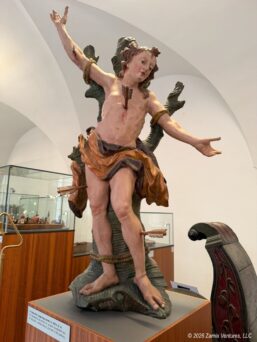
Maybe it was the upper-80s temperatures, with no A/C in the museum located in a former monastery, or general fatigue after a long day of sightseeing, but our reactions to the folk art became increasingly flippant as our visit went on. Again, match the captions:
- “St. Sebastian, are you being martyred or starring in a Broadway show?”
- “Turn around, go back, the mannequins are too terrifying.”
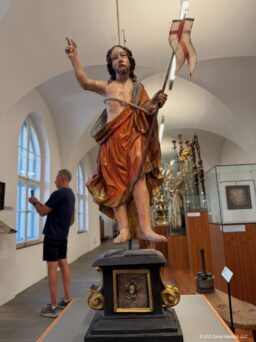
- “And Jesus said unto them, ‘Peace out, my dudes.'”
- “Am I hallucinating right now?”
- “It’s the mullet of outfits — business on the bottom, party up top.”
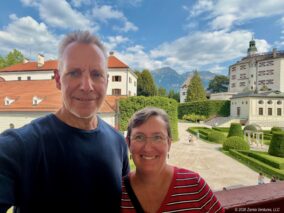
Things got back on track when we finally made it to Schloss Ambras, home of Ferdinand II, Archduke of Austria. Ferdinand II was a second son of the Holy Roman Emperor (the “spare”) who secretly married a commoner (albeit one from a prominent and wealthy banking family), built her a lovely modern castle to serve as their family home (complete with a bathroom to rival the one at Nymphenburg), and then built himself an entire separate library/man-cave facility to house his renowned collections. She wrote cookbooks and grew medicinal herbs; he invented the modern museum. It’s hard to look back through the centuries and confidently assess people who lived in very different times, but this seems like an incredibly interesting family.
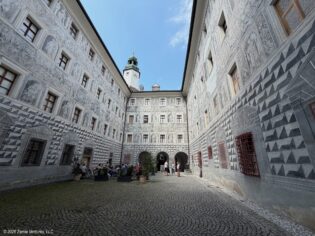
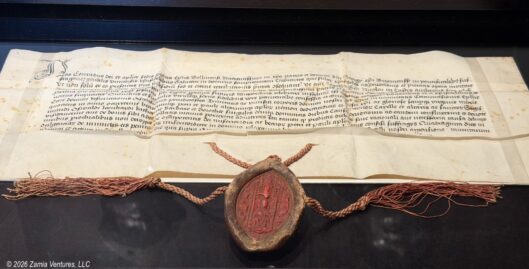
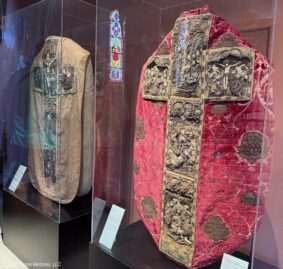
The residential castle itself is quite compelling, with an elaborately decorated main hall with portraits of Tyrolean leaders (the Spanish Hall), a well-preserved Renaissance courtyard, and lovely views from a perch in the mountains just south of Innsbruck. The St. Nicholas chapel inside the castle is fully equipped with historic altar pieces, vestments (textiles!) dating back to the 15th century, and indulgences sold by the Bishop of Brixen (with original wax seals attached).
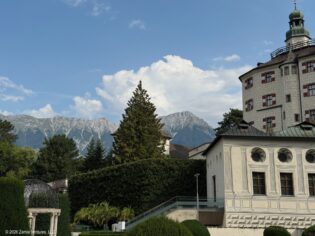
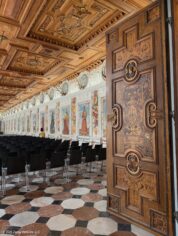
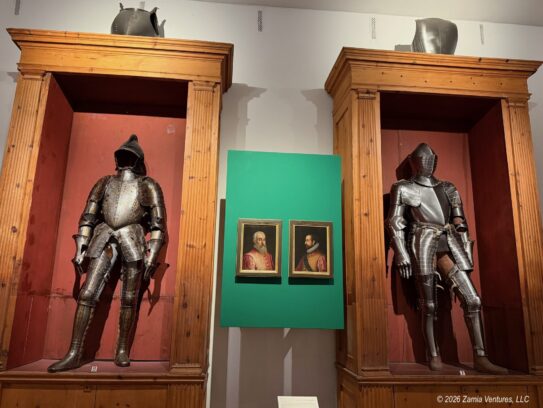
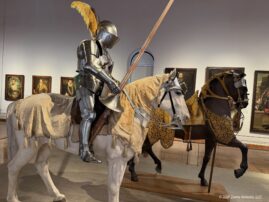
For us, however, the really fascinating area was the lower castle. The first part is a “hall of heroes,” an early version of a sports hall of fame in which Ferdinand identified major military leaders and displayed armor they actually wore along with their portraits and coats of arms. As the sole voter in this particular hall of fame, Ferdinand included many people who served the Habsburgs, but also allies in the struggles against the Turks, as well as people he deemed significant like Christopher Columbus.
The second part was his Chamber of Art and Wonders (Kunst- und Wunderkammer), in which he organized his collections of weird and wonderful things into custom-built cabinets. For example, separate cabinets might contain works made from gold; works made from corals; works made from crystal; works of mechanical genius (like locks and clocks); instruments of precision measurement, etc. He collected examples of unusual animals and people both in taxidermy (well, for animals) and in portraits. These items were organized and usually lived within their designated cabinets, but would be brought out for display on purpose-built stands to delight and entertain guests.
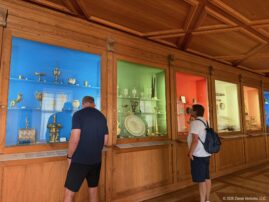
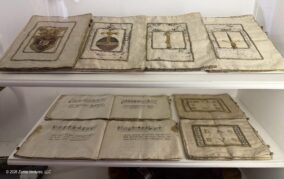
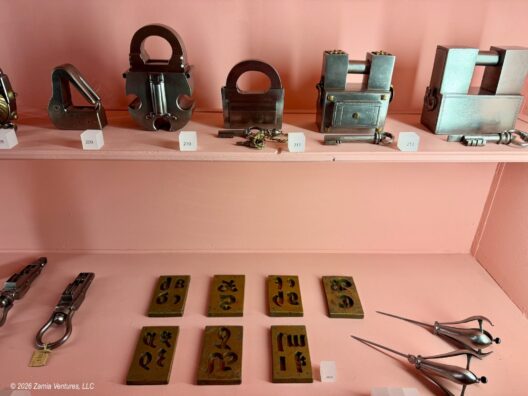
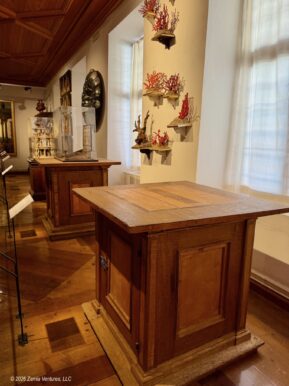
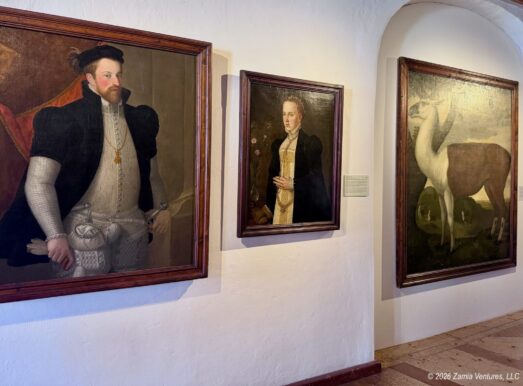
This whole collection is absolutely fascinating because it sits in its original location and is more or less complete, based on the inventory of Ferdinand’s estate in 1596, providing direct insight into what a person of wealth and culture found to be unusual, valuable, artistic, or otherwise memorable in the 16th century. For us, Schloss Ambras was worth the wait.
What we didn’t visit: the Hofburg (the Imperial residence), since we will be visiting Schönbrunn in Vienna; any of the other dozen-plus medieval churches; or any of the Olympic sports facilities around town. We also skipped the daily Tyrolean song and dance show that was advertised everywhere, though the promise of ice-cold air conditioning was enticing.
Lodging, Food, and Drink
For our stay in Innsbruck we once again selected a Motel One, a somewhat new European brand that reminds me of our beloved Hampton Inn, with small but comfortable rooms, cool bars, and relatively affordable prices. Our hotel was right by the train station, but since this is Austria the area is clean, feels safe, and was extremely quiet. It was also a 15 minute walk from the heart of the Altstadt. The top-floor bar was an outstanding place to unwind at the end of each day, surrounded by spectacular mountain views, and the adjacent train station was packed with useful things like a full-service grocery store that was open on weekends and holidays.
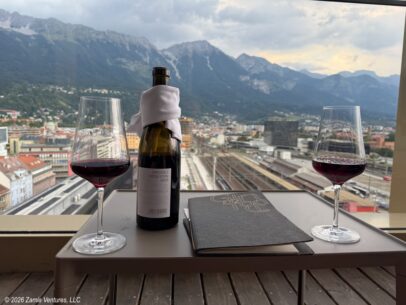
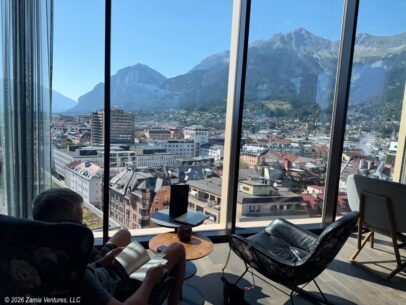
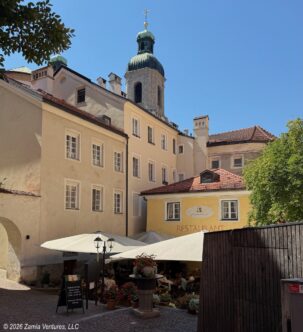
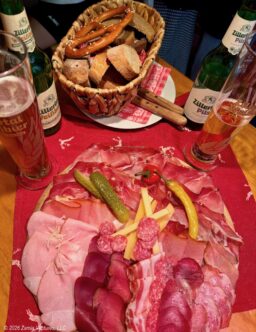
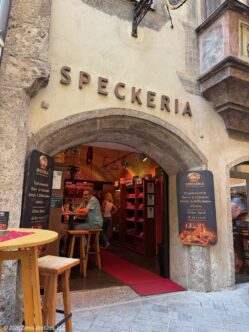
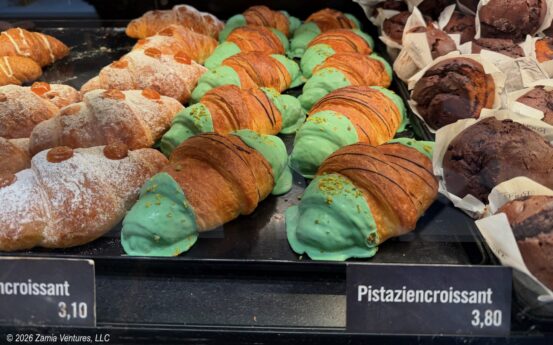
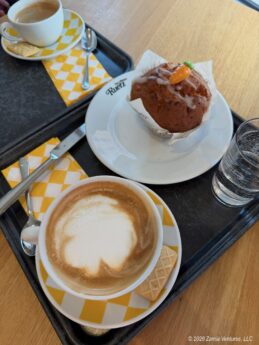
It only took three days for us to develop loyalty to a favorite bakery: Der Bäcker Ruetz. Suffice it to say there’s a reason this 125-year-old 5th-generation family owned business has 40 locations in the Tyrol. But because woman (and man) cannot live on pastries alone, while in town we also enjoyed several lunches of typical Tyrolean meals. The snackboard of meats and cheese at the Speckeria was a wonderland of smoked/cured meats and sausages, while Fischerhausl offered us a relaxing traditional lunch under the shade of giant umbrellas just around the corner from the Dom du St. Jakob and the Hofburg.
Next stop: Südtirol (South Tyrol) AKA the part of Italy where German is spoken!


Loved the hilarious Match-the-Captions challenges! I think I got them all 😆How bad is it that my favorite part was the modern hotel with the great view?
I don’t think it’s bad at all — even I, who did most of the planning for the trip, wasn’t always sure what we would like the best in our travels. That’s part of the fun of discovering new places. But I think you will like every single thing about our next stop, from the daily activities to the excellent and relaxing home base.
I’ve gained 3 pounds looking at the pastries.
Well the beauty of visiting Europe is that we are also walking 5+ miles every day, thanks to all those pedestrian-friendly areas, so we get to enjoy the pastries without guilt.
Speaking IKEA! I love it. Looking at the sign, I almost thought one of the icons meant to be read as “No walking on water”. Those crazy Europeans…
🙂
I think you are referring to the sign for “no walking on the grass” which is an interesting rule for a city park! But I have no doubt walking on water would also be frowned upon.
Your “death by a thousand churches” is our “we’re all churched out.” I’ve pretty much decided that the Notre Dame and Cologne cathedral are the only must-see churches in our future. They’re all beautiful and impressive of course, but… enough already. I’m not tired of palaces and castles yet, but I’m sure Europe will eventually wear me down on those too.
The view from that hotel continues to astound me. Though, all the views from this trip of yours have blown me away. What a gorgeous country!
PS: If anyone showed up at a party wearing the “mullet of outfits,” you KNOW he would be the life of the party.
My economics-brain has started intruding during visits to elaborate churches to interject, “Do you have any idea how many resources are being used up here without increasing productivity? How about spending 5% of this amount of effort teaching your population to read or studying better farming practices?” But I am a product of the post-Industrial Revolution, so I believe improvement in living standards is actually something that can happen and should be pursued.
Innsbruck really is gorgeous, nestled along the river and surrounded by high mountains. There aren’t a lot of tall buildings (the hotel’s top floor was 13) so it doesn’t take much to get sweeping views.
That outfit is actually the traditional costume of a “Saltner,” a vineyard-watcher who worked from the end of July until grape harvest. I have no doubt that it was successful in scaring away birds; I wonder if would-be human thieves fled in terror or rolled their eyes.
Wow, you certainly found the colorful and eccentric side of Austria! From the folk art (your match-the-captions-to-the-photos is hilarious! And I got them all right, too!) to the vibrant green of the pistachio croissants, you found all the good stuff, haha. I think I would enjoy browsing the Chamber of Art and Wonders. I’ve always been fascinated by the things people collect. Well, most things. And you are very wise to have decided early on to be selective about how many and which churches you were going to visit. It’s easy to get blasé about churches/historical buildings/castles/and all the old stuff if you’re not selective. But I know you, and I know you planned this trip to take advantage of the best of the best!
I’m glad you appreciate our instinct to bring the snark in order to liven up museum visits. Sometimes it’s necessary, especially when people don’t seem to realize that A/C would make everyone’s experience better. The other trick, of course, is not visiting too many museums! We were pretty pleased with Schloss Ambras, however, for all the reasons you noted. It was interesting to see what was “collectible” — the image of the llama was fun because it wasn’t totally clear at the time whether it was a real animal or a mythical creature. What is “weird” or “unusual” or “notable” is so dependent on context. So much about this trip has been about seeing different ways of looking at things, which of course is the whole point of travel.