
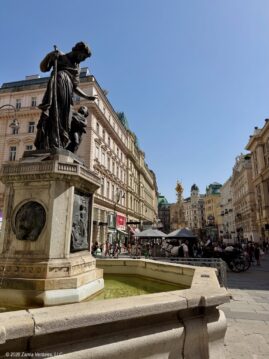
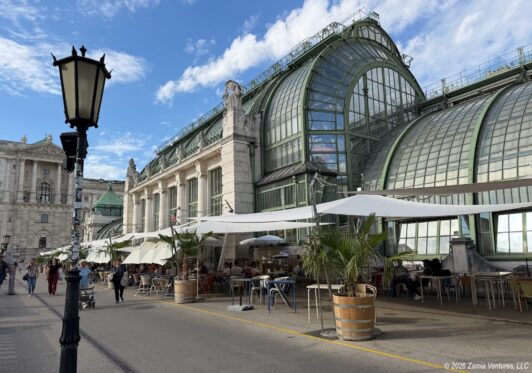
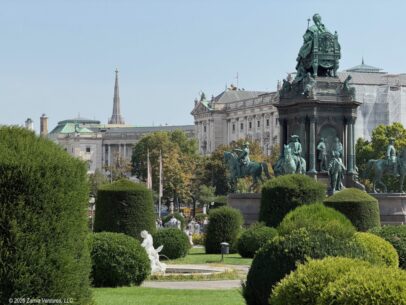
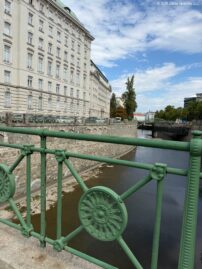
My previous post focused on the palaces and museums of Vienna, which were some of our daily destinations during our week-long stay. But what really defines the experience of visiting Vienna is walking through the wide avenues lined with elegant buildings and punctuated by open squares and lovely public gardens. Today’s ambiance was made possible by choices made during the long reign of Kaiser Franz Josef I, who was responding to immense population growth in the 19th century thanks to the Industrial Revolution. In 1857 the Kaiser declared that the ancient walls of the city, no longer needed to defend against the Turks, would be torn down and the city reconfigured with modern amenities like sewers, clean drinking water supply, and public transportation. The former moat outside the walls was transformed into the Ringstrasse, a broad boulevard surrounding the innermost part of the city, and decades of construction resulted in the abundance of stately buildings that define the city today.
Ring Buildings
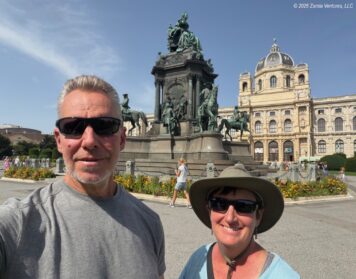
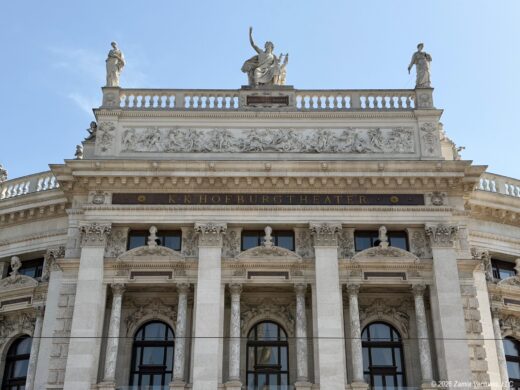
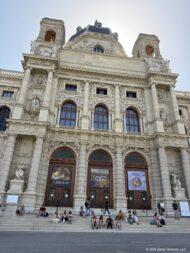
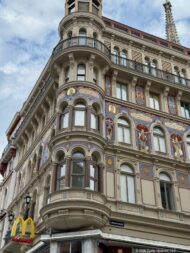
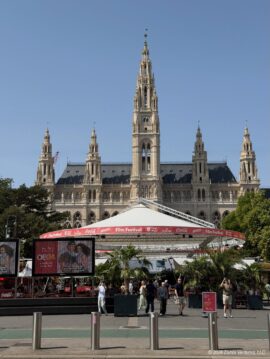
Like most major construction projects, the re-working of Vienna was controversial at the time, with preservationists upset about the demolition of many historic structures to make way for the new street alignments. However, when your leader is an emperor with absolute power, pesky procedures like eminent domain and citizen objections don’t stand in the way of progress when the Kaiser says, “It is my will.” The 19th century building boom employed large numbers of architects, artists, and tradespeople, and created impressive spaces for use by the increasingly significant Viennese bourgeois class: a Neo-Gothic city hall, a Neo-Classical parliament building and house of justice (courthouse), and Renaissance Revival university buildings and opera house. Because the 19th century fashion was to build buildings in a historic style that related to their function — e.g., the city hall was Gothic because cities first received charters and some measure of self-governance in the Middle Ages — strolling down the Ring is like a class in architectural history. The Kaiser also arranged for construction of two impressive museums on the Ring, one for art and one for natural history, to showcase the vast collections of the Habsburgs. Added to this visual bonanza are several major churches, the tidy and serene Volksgarten, the now-public gardens behind the Hofburg (the Imperial Palace), and numerous elegant office and apartment buildings. In the old city within the Ring, expanded avenues were showcases for similarly impressive buildings. The overall harmony of the city’s appearance persists today, with ground floor retail units occupied by glittering names like Louis Vuitton, Tiffany, and Rolex, together with more mundane tenants like McDonald’s and Starbucks. We took about a thousand photos just walking around town.










Vienna Modern
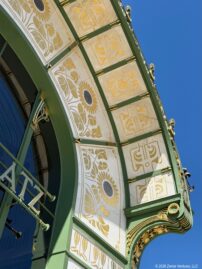
Even while the hammers were busily swinging on construction of buildings around the Ring intended to mimic historical styles, new ideas about art and architecture were emerging from the frothy artistic environment of Vienna in the late 19th century. The architect Otto Wagner was a leading voice against historicism; he urged new thinking about buildings and city planning appropriate for a machine age. Wagner used his position as artistic counselor for the new city train system (Stadtbahn) to put his stamp on the entire city by establishing a common visual vocabulary for all the bridges and stations. His consistent use of white, green, and gold to express shapes inspired by nature is instantly recognizable as part of the Art Nouveau movement and a key element of the visual harmony throughout the city. Wagner also used his position as a faculty member at the Academy of Fine Arts to advance his theories about modern architecture, which were quite similar to American architect Louis Sullivan’s concept that form must follow function.
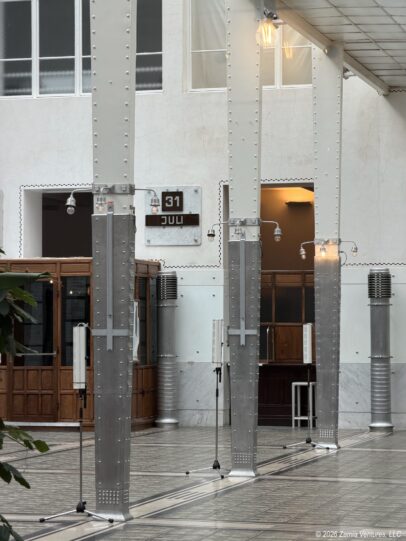
While in Vienna we made sure to visit Wagner’s (now-decommissioned) train station at Karlsplatz to admire its simplicity and elegance. We also admired the dramatic Secession Building, built as an exhibition space to host artists in the Art Nouveau movement who had broken away from the traditional Viennese artists’ guild to pursue modern ideas. We visited Wagner’s most modern and most famous building, the headquarters of the Österreiche Postsparkasse (Austrian Post Savings Bank), which he designed in 1903. Some of its many innovative features: maximizing natural daylight in the interior with a glass and steel central atrium and floors made of glass blocks; use of aluminum (a new material) for handles, light fixtures, and other details for improved durability and sanitation; and exterior cladding in pre-fab marble plates riveted to the building with aluminum.




KunstHausWien
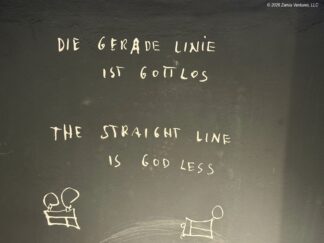
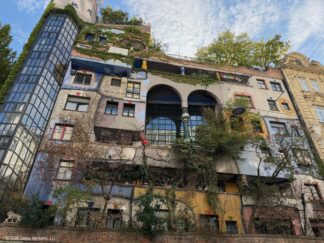
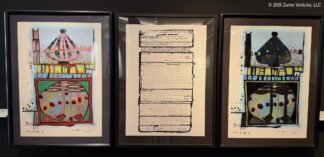
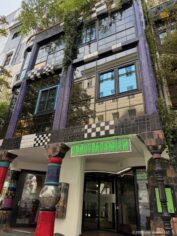
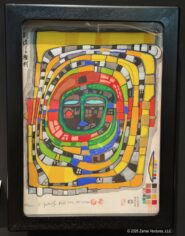
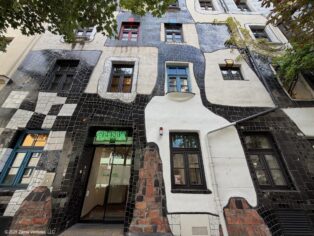
Our final and most contemporary art excursion involved traveling a bit outside the Ring to visit the KunstHausWien, a single-artist museum devoted to the life and work of late 20th century artist Friedensreich Hundertwasser (born Friedrich Stowasser). Hundertwasser worked in a variety of media ranging from paint to Japanese woodcuts to silk screen to architecture, and his bright colors and undulating lines are pretty unmistakable. His holistic theory of art rejected straight lines (including level floors!) as unnatural while idealizing the spiral as the perfect form. His insistence that all art must be unique and personal led him to develop interesting processes like a silk screen run of 10,000 copies in which each version was a slight variation of the former. He was an environmental activist who implemented green roofs and advocated for trees in cities long before these topics were cool. The KunstHausWien has an impressively large collection of his works from throughout his career, and the building itself is constructed according to his design principles, making for a thoroughly immersive experience. The museum is also just a few blocks from the Hundertwasserhaus, a municipal apartment building (part of Vienna’s famous social housing program) he designed in the 1980s that is probably the most interesting public housing in the world. It’s not open to the public, of course, but we enjoyed seeing the remarkable facade and imagining the pros and cons of living in such an iconic building.


Where We Stayed
As a vibrant capital city, Vienna has countless lodging options. We are usually willing to pay a premium for an excellent location, since we don’t want to spend our time commuting to and from various destinations, and in Vienna (like in Ortisei) we chose a centrally-located spot. We found this floor of efficiency-style apartments located just off Stephansplatz, and we were completely satisfied with our choice. We had a small kitchen (2 burner) stocked with equipment and one large room with the bed and seating area, which gave us a perfect spot to unwind. The outstanding views over the iconic St. Stephen’s Cathedral and the central square in town provided a steady source of entertainment, and the location put us within a 15-minute walk of most places on our itinerary.


Food and Drink
We are not frequent restaurant diners at home, and we specifically chose to rent an apartment with a kitchen so we could make most of our meals in, but we nonetheless had several dining options on our “must-do-in-Vienna” list. One experience we didn’t want to miss is the Viennese coffee house. Centuries of armed conflict with the Ottoman Empire brought Vienna in close contact with Turkish culture, and it was obviously an easy decision for the Viennese to appropriate the very best thing: coffee.
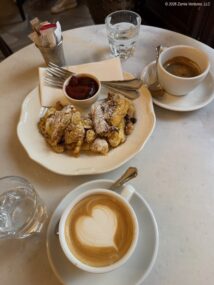
Coffeehouse culture involves everything from careful preparation of the precious nectar to servers clad in formalwear to the ability to linger for hours. We didn’t spend hours but still managed to make leisurely stops at a few of the famous coffeehouses in town. At Cafe Landtmann on the Ring near the City Hall, reportedly the daily hangout of Sigmund Freud and Gustav Mahler, we sampled the unbelievably flaky apple strudel and the light-as-air Mozart cake. Our fare at Demel’s location a few blocks from the Hofburg was Kaiserschmarrn, a pancake-like concoction served with plum compote and favored by Kaiser Franz Josef I.


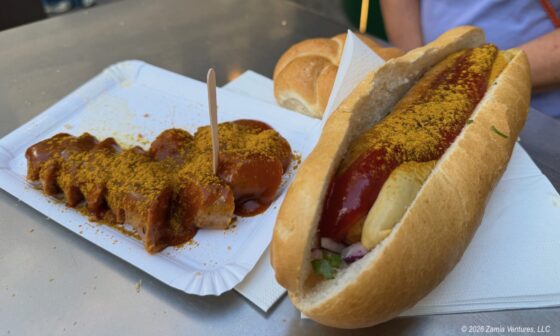
We also wanted to experience Viennese Sausage Stand Culture, recognized as UNESCO Intangible Cultural Heritage. Seriously! But even without the official recognition, what’s not to love about tiny booths on the sidewalks delivering fresh-grilled meats the moment you feel a little peckish? We visited the rabbit-adorned Bitzinger in front of the Albertina Museum for giant hot dogs encased in a baguette, and a different stand for currywurst and a Viennese hot dog (with red onions, mustard, and ketchup). Also, no visit to Vienna would be complete without consumption of a Wiener Schnitzel, and we made reservations (very much needed) at Figlmüller to try the plate-size schnitzels they have been serving since 1905. A pleasant surprise: one of best potato salads I’ve ever eaten.



While the restaurants and coffee houses lived up to their reputations, we were also impressed by the Billa Corso grocery store located a few blocks from our apartment. Covering three floors, and offering full grocery, deli, and bakery as well as a chic wine bar, this place was a treasure trove of food. We found excellent local wines to enjoy, and the grocery store cakes and pastries absolutely held their own in comparison to the offerings at the fancy cafes.


Speaking of wine, we found that Austrian and Tyrolean menus and grocery stores are stocked with locally-produced wines in varieties that were mostly new to us, while wines from California were very rare. I asked our Vienna hosts whether this was due to our stupid trade wars, but learned that in Austria people generally prefer local products, with wines from Italy representing the exotic foreign option. We enjoyed learning about Blaufränkisch, Zweigelt, Lagrein, Welschriesling (no relation to Riesling), Pinot Bianco, and other local grape varietals. The white field blend (Wiener Gemischter Satz) is a bit of an acquired taste.
What We Didn’t Do
We intentionally left some of the most popular and well-known Vienna sights untouched. Principal among these is the Kunsthistorischesmuseum (Art history museum). Purpose-built to display the enormous Habsburg collections, the museum has both architectural interest and a comprehensive collection that is not just focused on Vienna/Austria. For us, it’s comparable to the Metropolitan Museum of Art. When Ken was working in New York City over a decade ago, we had memberships at the Met, and it took us a year of visiting several Saturdays each month to get through the collection. More recently, on our trip to Chicago, we took out a membership at the Art Institute in order to visit daily for a few hours over four days so we didn’t burn out. Just knowing our style, tackling the Kunsthistorischesmuseum in a single visit seemed like a recipe for frustration. Similarly, we appreciated the exterior but didn’t enter the Naturhistorisches Museum Wien (Natural History Museum) across the plaza. We’ve seen several of the best in the world in this category and didn’t feel that we needed to see the Habsburg spin on this type of museum.
We had a few near-misses that were game-time decisions as well. We had originally planned to spend Saturday visiting Grinzing, a grape-growing suburb of Vienna located in the city limits and reachable by tram line but filled with wineries instead of museums. However, the day threatened rain and we had a lot of trouble determining the opening schedule of the places that interested us most. Visiting a family-operated winery and meeting the winemaker is great; spending 40 minutes on transit to visit a family-operated winery and finding it closed for the month of August for vacation is less than great.
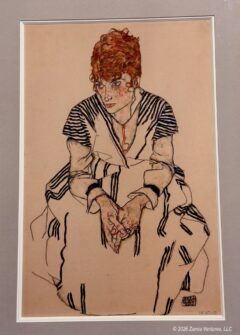
We has also penciled in a visit to the Leopold Museum, a relatively new spot in the MuseumQuartier located in the former stable yards of the imperial palace. The museum derives from the personal collection of the Leopold family, who collected works by Klimt, Schiele, and Kokoschka in the 1950s and 1960s when they still carried a taint of “degenerate art,” building one of the finest collections of these influential Viennese artists. We were attracted to the strong Viennese connections of the collection, but to be honest we weren’t up for the emotional darkness and trauma of large amounts of Kokoschka and especially Schiele. He was a great talent but also a tortured soul; my favorite Schiele in Vienna was a drawing of his sister-in-law at the Albertina that shows his talent and style with sensitivity instead of the usual anguish.

Overall, we were really pleased with how we spent our time in Vienna; the week was full without being overwhelming. For us the key was being very selective about seeing unique-to-Vienna destinations and not trying to do it all – except when it came to delicious food!



I love that the fancypants coffee house has waiters in suits but it is the sausage stand outside that gets the recognition for being a cultural treasure. 🙂
Vienna certainly seems like a place where anyone could find something to love and something to hate. For me, a lover of all things symmetrical, the beautiful buildings, wide avenues, and manicured gardens would make my heart sing, while the museum for the guy who hated straight lines would make me want to tear my hair out. Fortunately, there’s something for everyone in Vienna and now I know what to prioritize and what to avoid.
Beautiful photos and wonderful (helpful) descriptions, as always!
I definitely agree with the sentiment that there is something for everyone — it was tempting to try to do too much and our biggest victory was overcoming the urge to try to see everything. It’s a great city for walking and just taking in the streetscapes, especially the Ring and Innere Stadt, so I think you guys will love visiting when you make it there. Also, make sure you try BOTH the sausage stands and the coffee.
Looks like a great smorgasbord of delights. One note, the Torres potato chips you picture are from Spain and they are fabulous. I first encountered them in western Mass but have since found them locally in central VA.
We were so amazed by the classy potato chips that we could not resist the urge to buy the caviar flavor! It puts barbecue flavor to shame. I will have to see if anyone near us carries them…
It surely looks like you once again found all the sorts of things you enjoy, and I marvel, once again, at how varied are the things people enjoy. That straight-line-hating artist’s work makes me feel a bit nauseated, and I think I would have to be very careful of seeing it with a belly-full of schnitzel and pastry.
I did not realize that my readership is so dominated by people who like straight lines! Now, the lumpy, un-level floors in Hundertwasser buildings would drive me completely nuts as a resident but I love his bold colors and obviously hand-drawn lines. The idea that buildings should promote the physical and mental health of occupants seems pretty sound; I guess the controversy arises over the method of achieving this. Otto Wagner loved sleek and sanitary aluminum; Hundertwasser wanted to put a tree inside your living room. As Laura said, Vienna has something for everyone!